Books and investor records for every kind of investment.
AssetFlow keeps the books for your rentals, flips, business stakes, and private loans. When you pool capital it also tracks who put in what, works out who is owed what, shows investors their own numbers, and prepares the payment file. Your bank sends the money.
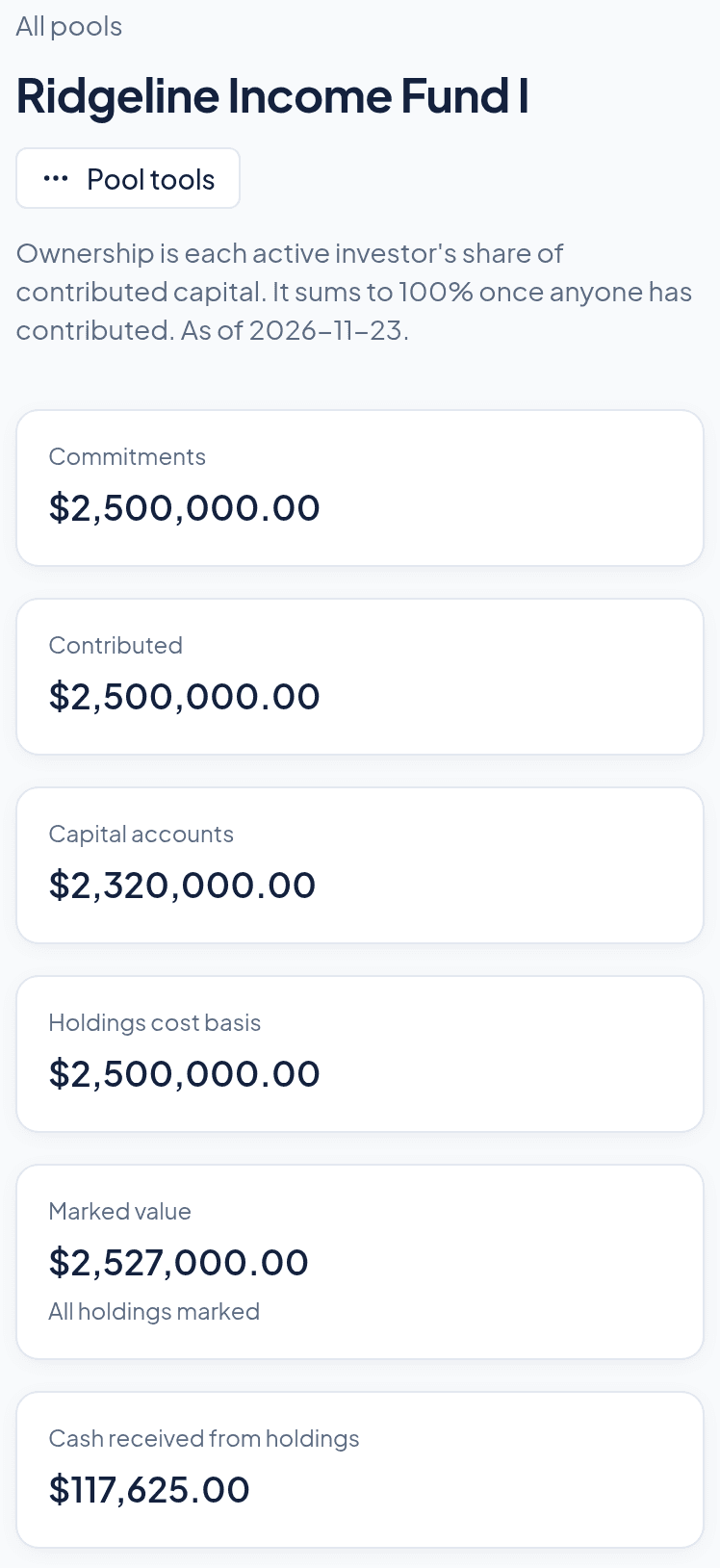
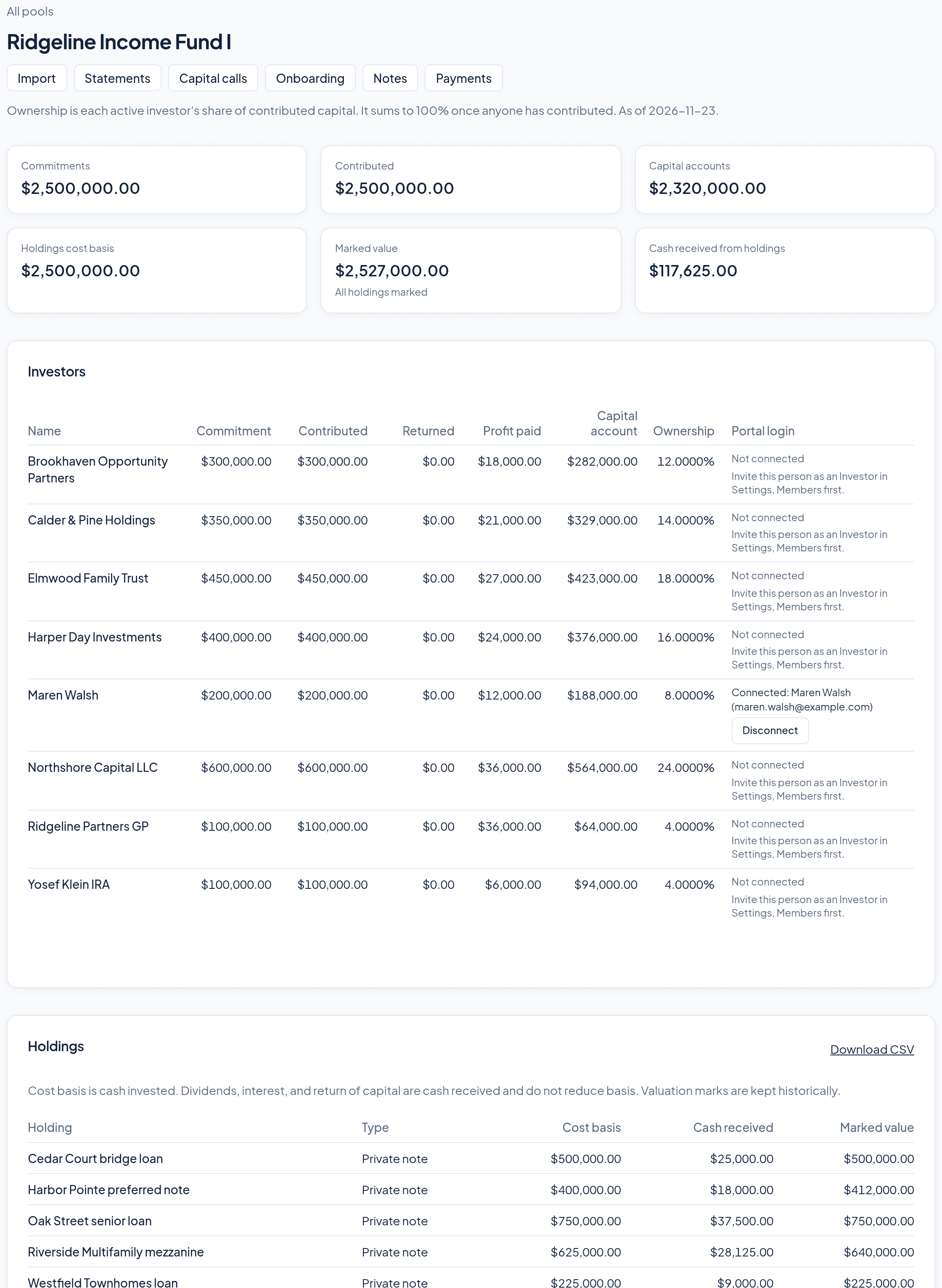
Pools and investor capital accounts
Create a pool, add investors, and record commitments and contributions. Each investor has a capital account, and ownership percentages update as money comes in and goes out.
Every entry is dated and kept in the ledger, so a balance can always be traced to what produced it.
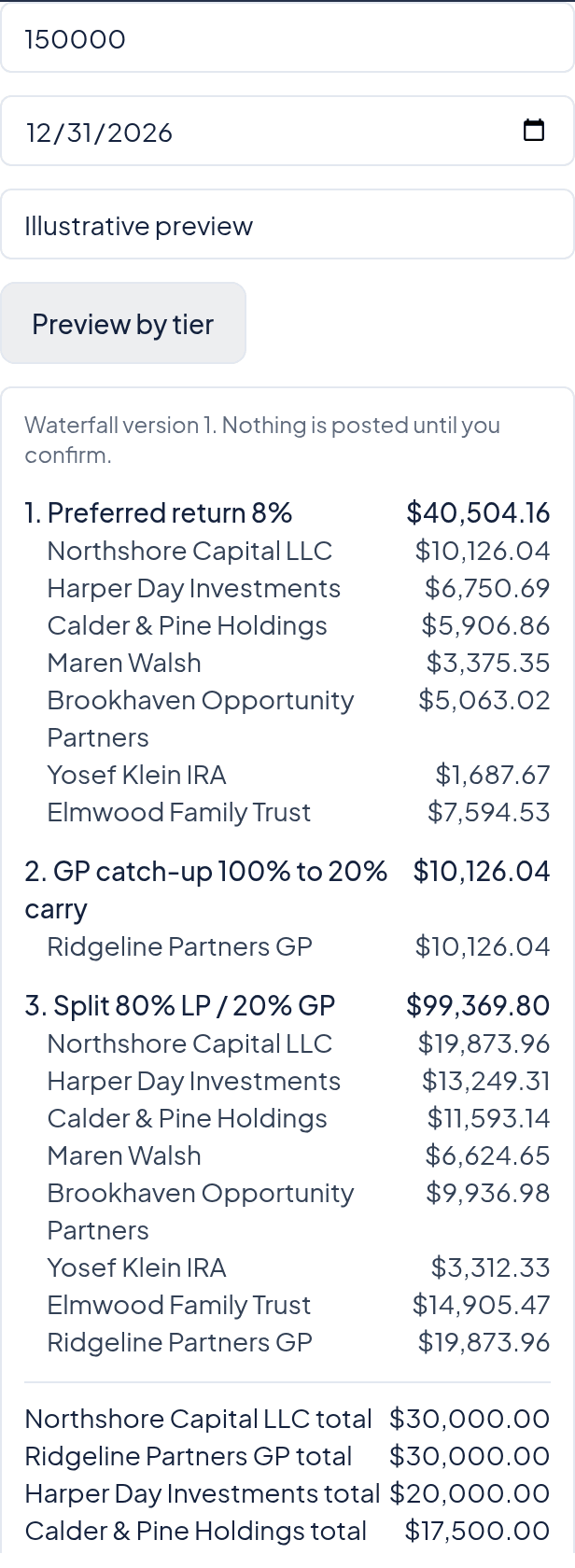
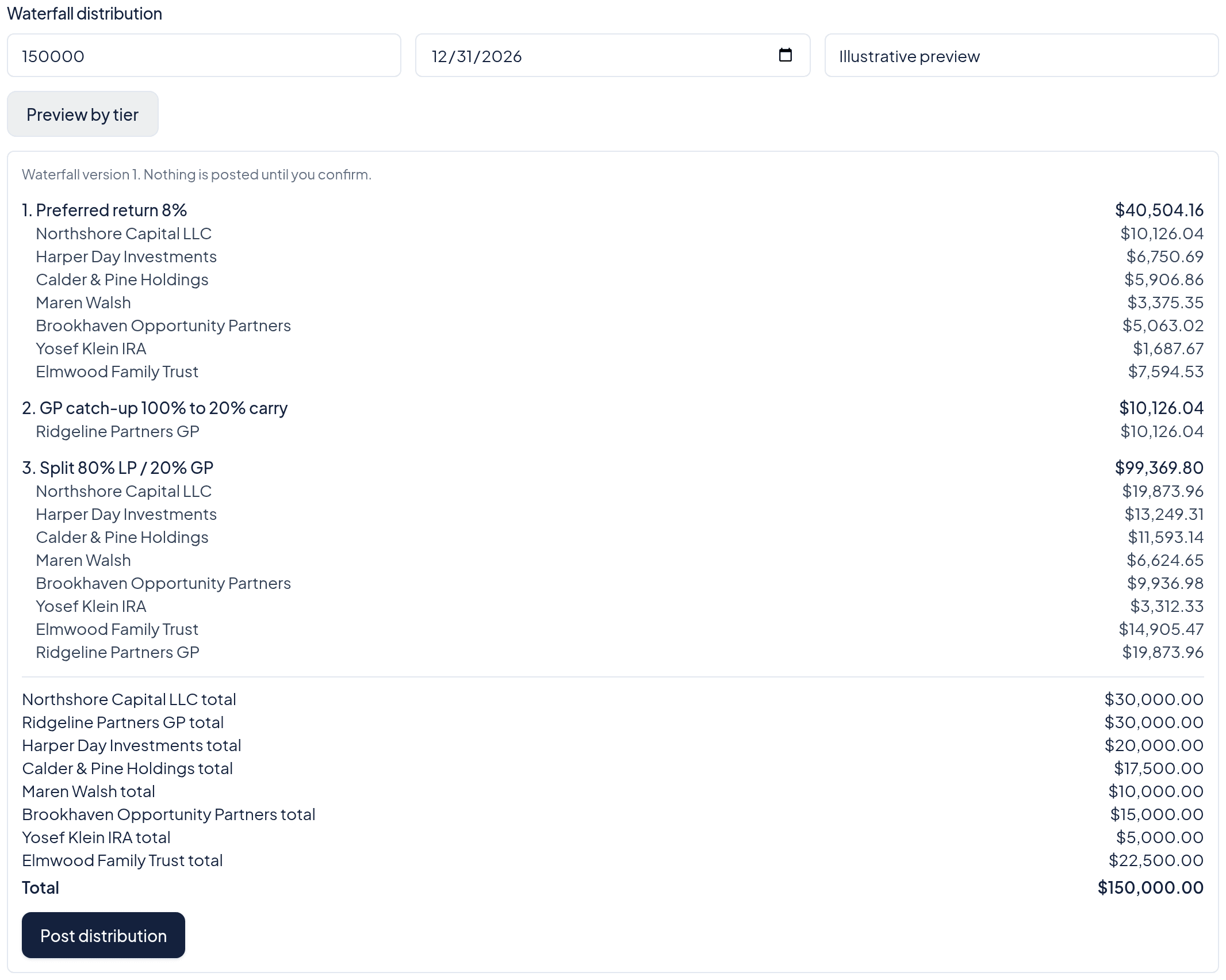
Configurable distribution waterfalls
Set up return of capital, preferred return, catch-up, and profit splits in the order your agreement describes. Enter the cash to distribute and preview exactly who receives what.
Nothing changes until you post the distribution. After that, capital accounts update to match.
The investor portal
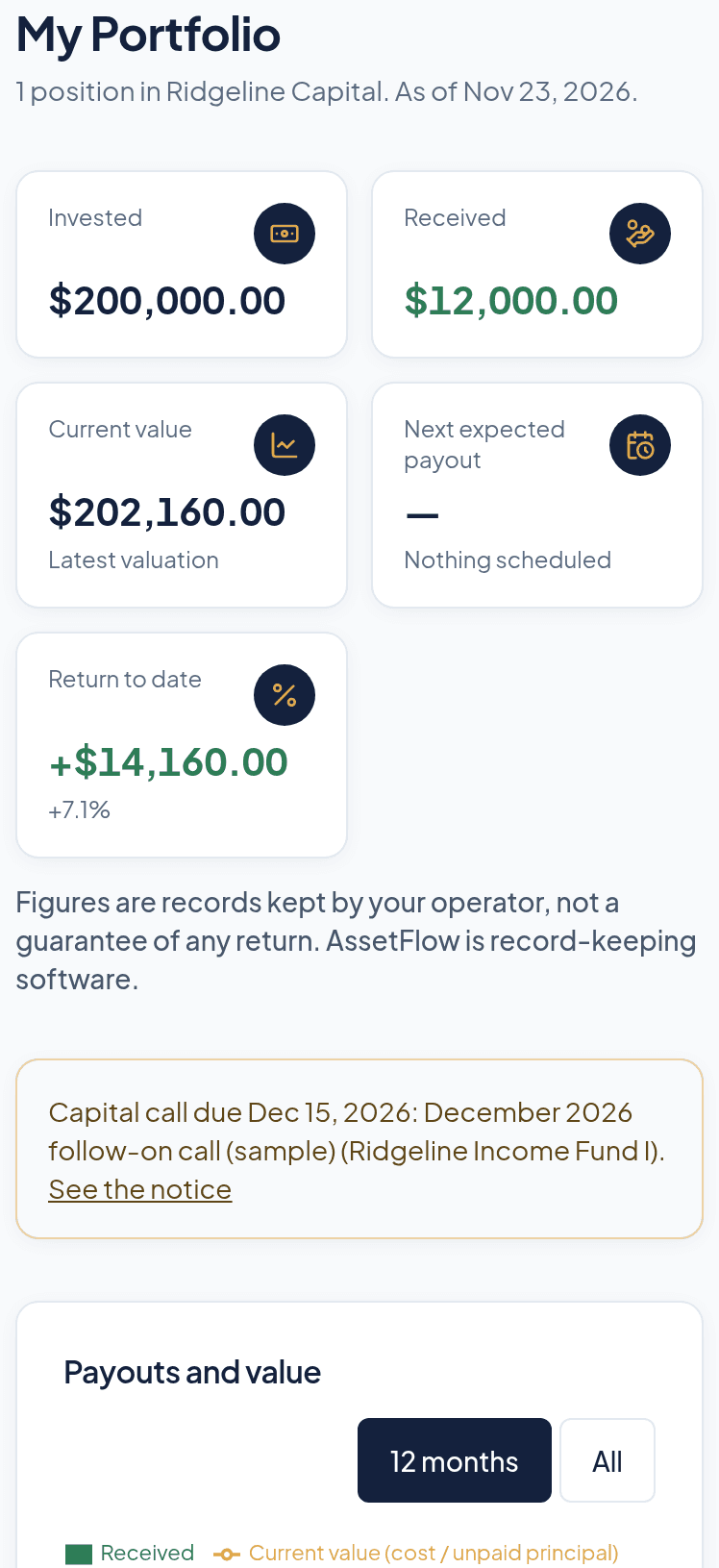
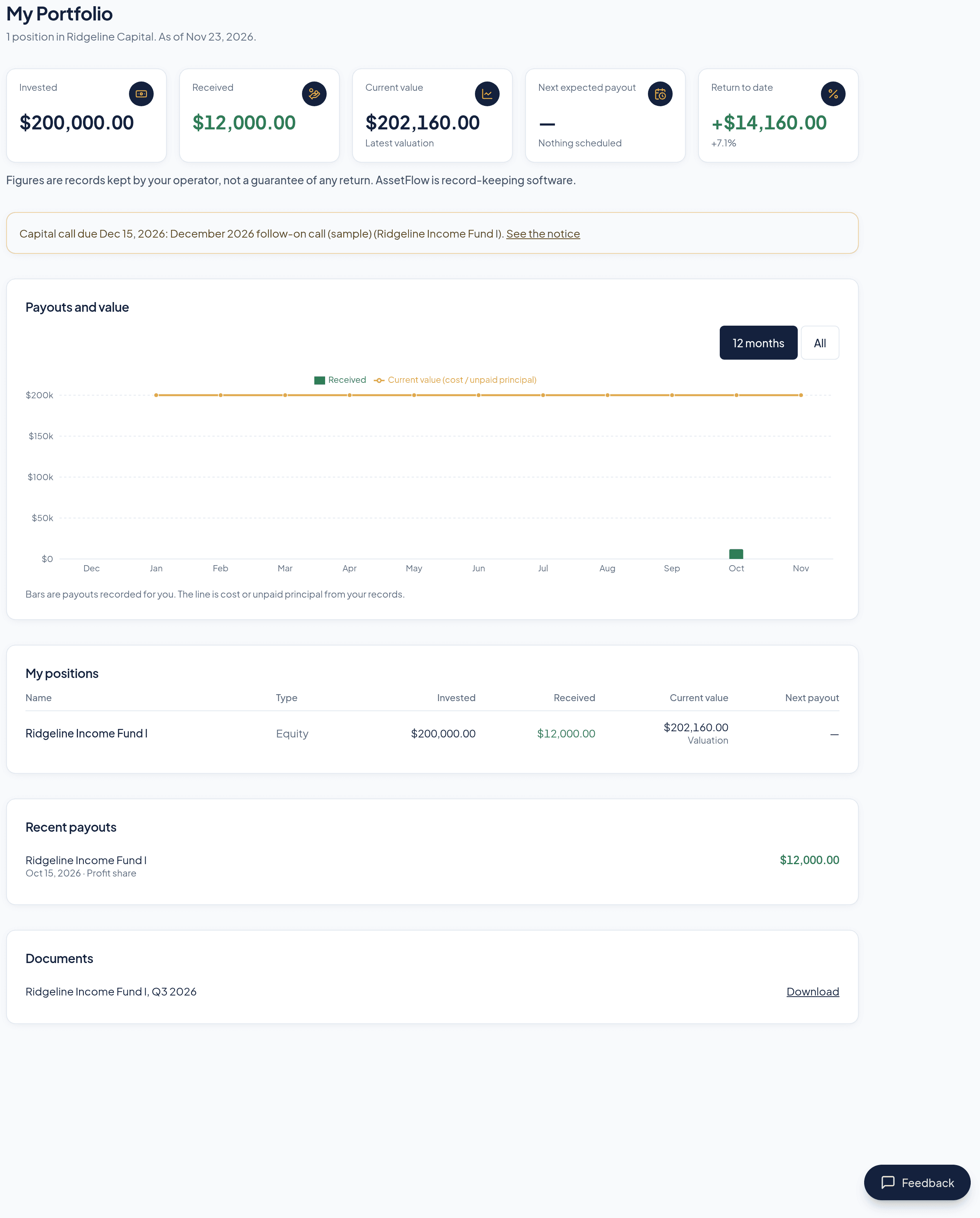
Investors sign in to see their own holdings, distributions, updates, and documents. Access is read-only and limited to their own records. They cannot see other investors.
Payments and NACHA export
From a posted distribution, AssetFlow prepares a NACHA file. You upload it to your own bank, and your bank sends the payments. Then you record that they were paid.
AssetFlow never holds or moves money. Investor bank account numbers are encrypted at rest.
Documents and reporting
Keep statements, agreements, and tax documents with the pool they belong to. Run reports for a whole pool or for a single investor.
Books for rentals, flips, and loans
Every property gets a double-entry ledger with receipts, vendors, mortgage tracking, and bank connections through Plaid. For a rental, record lease terms and expected rent, and use a monthly calendar to see which payments were recorded. For a flip, record a rehab budget and track spend against it, with an estimated profit from your after-repair value. Private notes track borrower, rate, balance, and payment schedule.
Business and equity stakes are recorded as holdings inside a capital pool, with ownership percentage, cost, distributions, and valuation marks. Investment clubs can use a pool for members, contributions, ownership, and distributions.